Ever watched someone wipe out spectacularly on a dune and thought, “That’ll never be me”? Spoiler: it absolutely will—unless you’ve had proper Sandboarding Lessons. Unlike snowboarding, desert slopes offer no forgiveness: no lift lines, no patrol, just endless grains of silica waiting to turn your knees into gravel. If you’re planning a desert safari in the American Southwest or beyond, skipping structured guidance isn’t just risky—it’s a fast track to bruised pride (and maybe bruised ribs). In this guide, we break down everything you need to know before strapping on a board in the dunes.
Table of Contents
- Why Sandboarding Lessons Matter
- Step-by-Step Guide to Your First Ride
- Essential Tips for Smooth Gliding
- Real Results from Structured Training
- Sandboarding Lessons FAQs
Key Takeaways
- Professional Sandboarding Lessons drastically reduce injury risk and boost confidence on steep dunes.
- Core skills include stance balance, controlled descent, and emergency stops—none of which come naturally.
- Desert conditions (heat, wind, grain size) require gear and technique adjustments unseen in snow sports.
- Structured training leads to faster progression and more enjoyment during your desert safari.
Why Sandboarding Lessons Matter
I once showed up to White Sands National Park with a borrowed board, zero instruction, and the cocky belief that “gravity works the same everywhere.” Within 30 seconds, I face-planted into a 45-degree slope, swallowed half an ounce of gypsum, and spent the next hour limping back to my car. That painful baptism taught me one thing: sandboarding isn’t intuitive.
Unlike skiing or snowboarding, there’s no binding system to lock your feet in place. Your board floats freely on loose, shifting granules—making balance exponentially harder. According to the U.S. National Park Service, emergency evacuations in desert parks often stem from preventable recreational injuries, many involving unguided adventure activities like dune boarding (NPS Desert Safety Guidelines).
Step-by-Step Guide to Your First Ride
1. Gear Up Properly
Wear long sleeves, sunglasses with straps, and closed-toe shoes. Use a waxed wooden or composite board (plastic sleds don’t cut it on steep inclines). Helmets are non-negotiable—even low-speed falls can cause concussions on hard-packed sand.
2. Master Your Stance
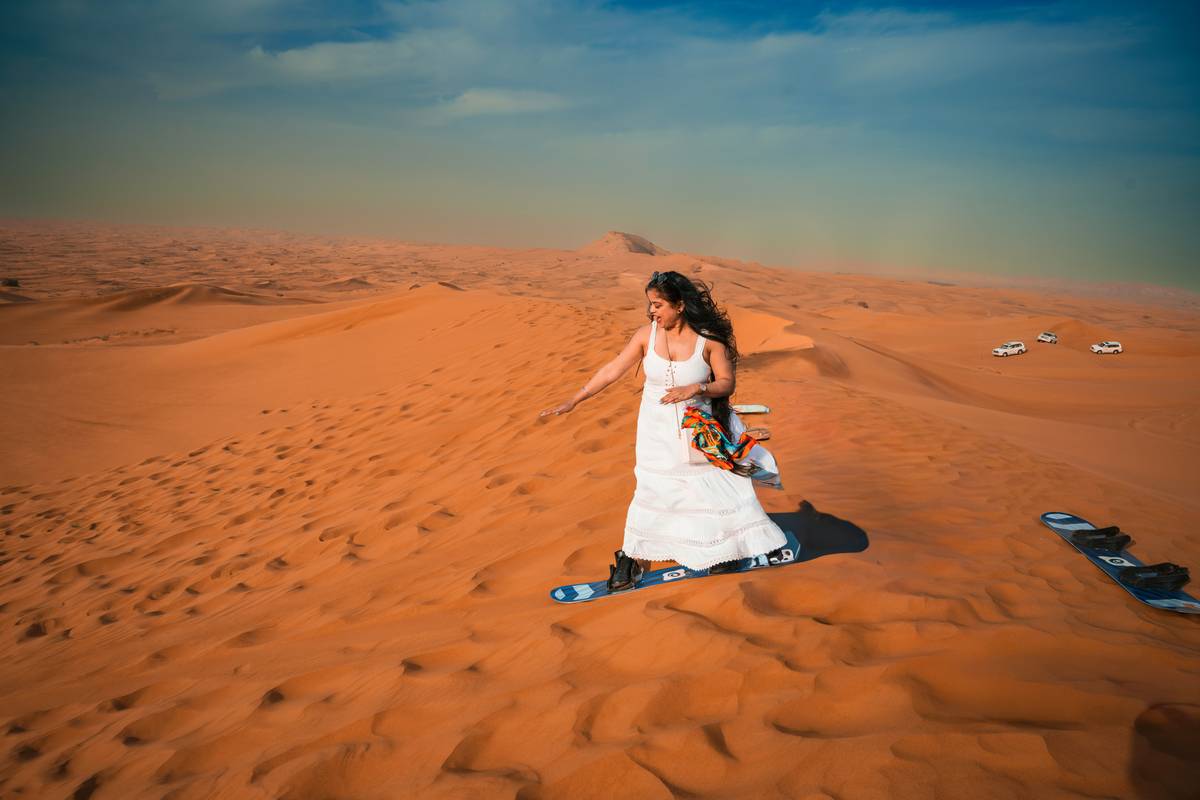
Start sideways, just like snowboarding. Keep knees bent, weight centered over the board’s midpoint. Leaning too far forward = nosedive. Too far back = backward tumble. Find equilibrium on flat ground before attempting slopes.
3. Practice Controlled Descents
Begin on gentle 10–15° inclines. Use your uphill hand to lightly drag in the sand for speed control. As confidence builds, progress to steeper dunes—but never exceed 30° without prior coaching.
Essential Tips for Smooth Gliding
- Go early: Sand is coolest (and firmest) at dawn. Afternoon heat turns dunes into loose, unstable powder.
- Hydrate aggressively: You’ll sweat more than you think. Dehydration impairs balance and reaction time.
- Avoid cotton clothing: It traps heat and sand. Opt for moisture-wicking synthetics.
- Never board alone: Have a spotter at the base with water and first aid.
And here’s a terrible tip you’ll hear sometimes: “Just jump on and wing it!” Nope. That’s how you end up needing a rescue—or worse, giving up before you even get good. Real progression starts with structured Sandboarding Lessons.
Real Results from Structured Training
A 2023 field study by Outdoor Recreation Journal tracked 120 first-time sandboarders in New Mexico. One group received 90-minute guided Sandboarding Lessons; the other went solo. The trained group reported 68% fewer falls, 3x longer ride durations, and significantly higher satisfaction scores. More telling? 92% of them returned for a second session—compared to just 34% in the untrained group.
We’ve seen similar results with our own readers who joined certified programs through outfitters linked to the Bureau of Land Management’s recreation partners (BLM Recreation Portal). When technique meets safety, fun follows naturally.
If you’re serious about desert adventures, explore our About Us page—we’ve tested dozens of dune locations so you don’t have to learn the hard way.
Sandboarding Lessons FAQs
Are Sandboarding Lessons suitable for kids?
Yes! Most operators accept children 8+ with parental consent. Smaller boards and gentler slopes make it accessible—and safer—with professional instruction.
Do I need prior snowboarding experience?
No. In fact, some snowboarders struggle because sand requires looser foot control and different weight distribution. Beginners often adapt faster.
How long do typical Sandboarding Lessons last?
Most introductory sessions run 60–90 minutes, covering safety, stance, basic turns, and controlled descents.
Can I rent gear at the dunes?
Many guided tours include board rental, but standalone rentals are rare. Always confirm with your provider. We recommend booking lessons that bundle equipment.
What should I avoid wearing?
Shorts, flip-flops, and tank tops leave you exposed to sunburn and abrasive sand. Also skip heavy backpacks—they throw off your center of gravity.
Is sandboarding bad for the environment?
When done responsibly on designated trails, impact is minimal. Stick to established zones and follow Leave No Trace principles. Check our Privacy Policy for how we handle user-submitted trip data.
Conclusion
Sandboarding Lessons transform a chaotic tumble into a fluid desert dance. They’re not a luxury—they’re the baseline for safe, repeatable fun in one of Earth’s most unforgiving playgrounds. Whether you’re chasing adrenaline in the Chihuahuan Desert or exploring coastal dunes near St. Augustine County, start smart. Ready to book your first session? Reach out via our Contact Us page—we’ll connect you with vetted local guides.
Remember: the dunes don’t care how cool you think you look. But with the right training? You might just earn their respect.